Why is it called ping? Sonar, submarines, and an acronym that isn't
The first tool anyone reaches for when the network dies was written in one evening in 1983 by a man thinking about submarines. The acronym everyone quotes for it was invented by someone else, after the fact, and the author's response to it was better than either story.
AI-assisted postDrafted with help from Claude, edited and fact-checked by Mart. See transparency policy →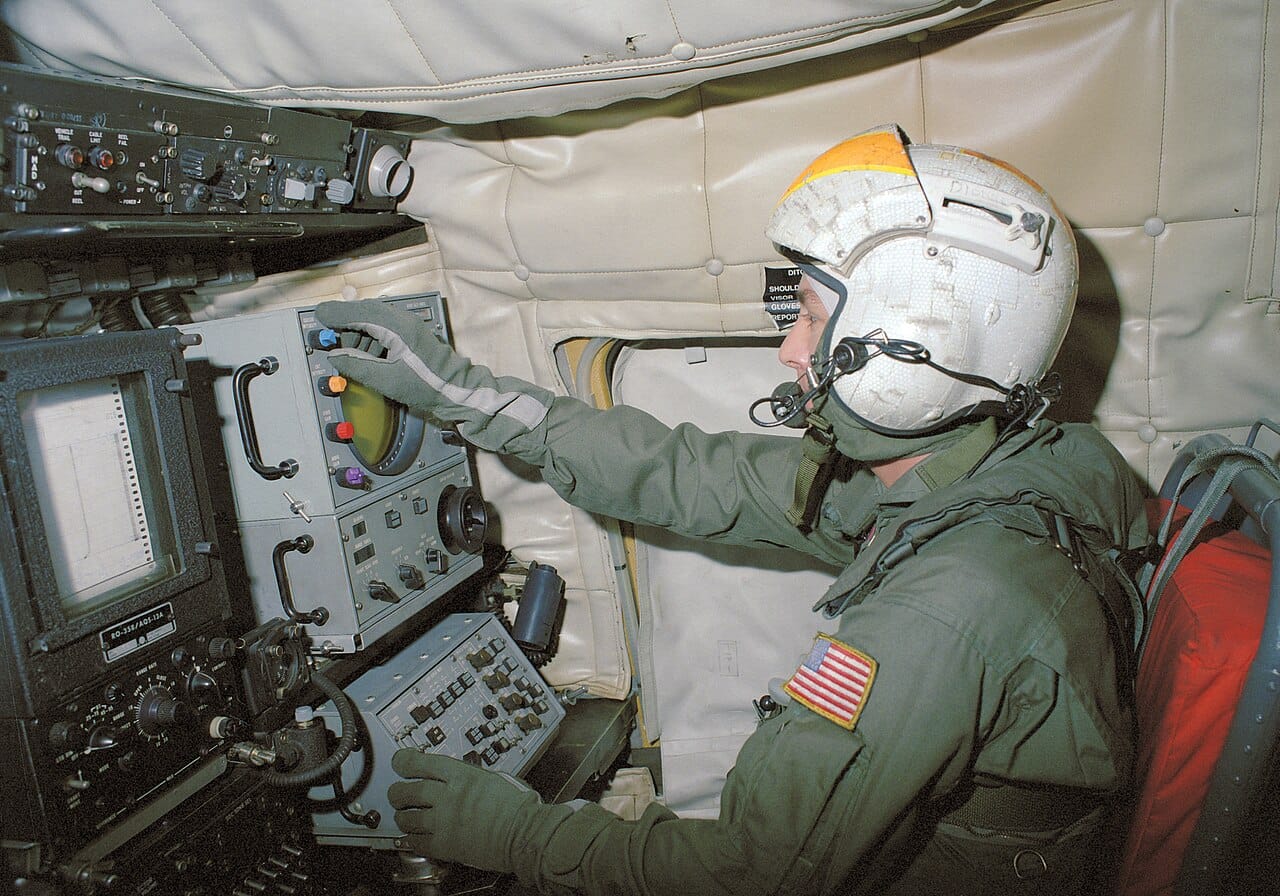
A sonar operator aboard an SH-3H Sea King, 1987: send a pulse, wait for the echo, measure the distance. Photo PH3 Whorton, US Navy, public domain.

The first command anyone types when the network misbehaves is named after a sound effect. ping was written in December 1983 by Mike Muuss at the US Army's Ballistic Research Laboratory, and he named it after exactly what you think: the sound of active sonar — a pulse sent into the dark, a wait, an echo that tells you something is out there and how far. The program does literally that, with ICMP1 echo-request packets instead of sound: send, listen, measure the round trip. It is the rare Unix name that is a perfect metaphor with no inside joke required.
🔗 Learn more — 1 What is ICMP?
The acronym that isn't
You will find "ping stands for Packet InterNet Groper" confidently stated all over the internet, including in old man pages. It is a backronym — invented after the name, proposed by David Mills (of NTP fame), not by the author. Muuss's own verdict on it is the most gracious backronym ruling in the whole genre:
"From my point of view PING is not an acronym standing for Packet InterNet Grouper, it's a sonar analogy. However, I've heard second-hand that Dave Mills offered this expansion of the name, so perhaps we're both right."
Compare the fates of the fakes in this lane: daemon's "Disk And Execution MONitor" got flatly disowned by Corbató, git's "global information tracker" was a self-aware joke from day one, and ping's groper got a diplomatic perhaps we're both right from a man too polite to kill a colleague's pun. Three backronyms, three temperaments.
One evening in 1983
Muuss wrote ping in an evening, to debug a misbehaving network path — a thousand-line tool whose design has not meaningfully changed in four decades. Send a packet to an address (say, 127.0.0.1, if you suspect yourself), print the round-trip time, repeat. Its longevity comes from sitting at exactly the right layer: below DNS2, below routing opinions, below everything that lies to you. If ping answers, wire and stack are alive and the problem is above them; if it doesn't, no amount of application debugging will help. Forty years of network engineering practice compresses to ping it first, and when ping is ambiguous, traceroute picks up the story.
🔗 Learn more — 2 What is DNS?
The word then did what good tool names do: escaped the terminal. "Ping me" — send me a short signal, expect an echo — is ordinary office English now, used daily by millions who have never opened a shell3. Sonar → ICMP → Slack. The metaphor survived two full changes of medium without losing its shape, which suggests Muuss picked something closer to a law of nature than a name.
🔗 Learn more — 3 What is a shell?
Muuss died in a car accident in 2000. His little sonar program may be the most-run diagnostic in computing history — a reasonable legacy for an evening's work, and for the only tool in this series named after a sound.
ping: written December 1983 by Mike Muuss at the Ballistic Research Laboratory, named for the sonar pulse, not for "Packet InterNet Groper" — that expansion came later from Dave Mills, and Muuss's ruling was "perhaps we're both right."
Read next