Where the word 'daemon' comes from (and why it isn't 'demon')
The Unix daemon was named at MIT around 1963 after Maxwell's demon — a tireless background sorter from thermodynamics — not after any religious devil. The Greek daimon meant a benevolent guiding spirit, and "Disk And Execution Monitor" is a backronym invented decades later.
AI-assisted postDrafted with help from Claude, edited and fact-checked by Mart. See transparency policy →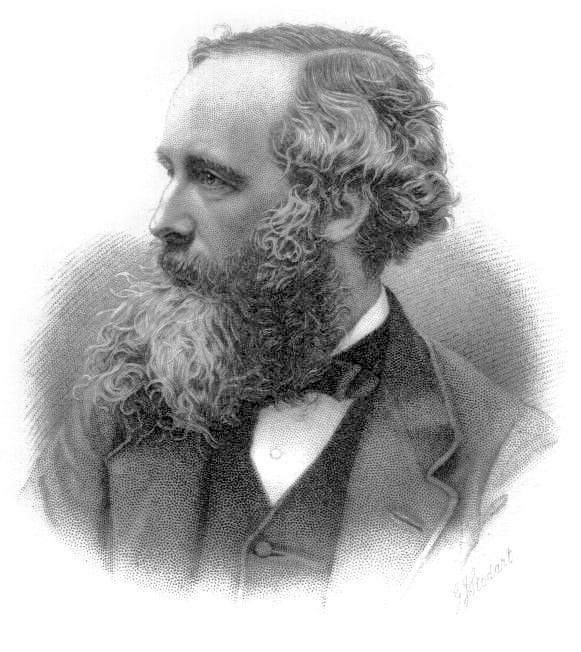
James Clerk Maxwell — engraving by G. J. Stodart, public domain. His 1867 "finite being," later nicknamed a demon, is the reason your system runs daemons.
The background process that quietly handles your system's chores — sshd listening for connections, crond firing scheduled jobs, systemd supervising everything — is called a daemon, with the archaic spelling, and the spelling is doing real work. It is not a demon. The word was chosen at MIT in the early 1960s as a reference to a specific thought experiment in physics, and the people who chose it knew exactly what they were invoking: not a devil, but a tireless invisible agent doing useful sorting work that a human would never want to do by hand. The misreading of "daemon" as "demon" — which gave Unix a horned mascot and a fake acronym — came much later, and it gets the etymology precisely backwards.
Maxwell's demon, 1867
In 1867 the physicist James Clerk Maxwell proposed a thought experiment to probe the second law of thermodynamics. Imagine a container of gas divided in two by a wall with a tiny trapdoor. A hypothetical being — Maxwell called it merely a "finite being," it was William Thomson (Lord Kelvin) who later dubbed it a "demon" — sits at the door and watches the molecules. When a fast molecule approaches from the right, it opens the door and lets it through to the left; when a slow one approaches from the left, it lets it through to the right. Over time, without expending any obvious work, the being sorts the gas into a hot side and a cold side, apparently decreasing entropy and violating the second law.
The paradox took a century to resolve properly (the resolution involves the thermodynamic cost of the information the demon must acquire), but the image is what matters here: a tireless, invisible agent, sitting in the background, doing patient sorting work forever, asking nothing and seen by no one. That is precisely the shape of a background system process, and the engineers at MIT noticed.
Project MAC, around 1963
The term entered computing at MIT, on the Compatible Time-Sharing System (CTSS) and the work that became Project MAC, around 1963. The clearest account comes from Fernando J. Corbató, who led the CTSS project. His explanation is quoted in the standard references:
"We fancifully began to use the word daemon to describe background processes that worked tirelessly to perform system chores."
The first such program reportedly automated tape backups — a chore that runs forever, needs no supervision, and is invisible until it fails. The metaphor was Maxwell's demon: an agent working tirelessly in the background to sort and shuffle, never tiring, never asking. Corbató and his colleagues chose the older spelling, "daemon," deliberately, and the choice carried a second layer of meaning that the modern "demon" reading erases entirely.
The Greek daimon was a good thing
The spelling "daemon" points back to the ancient Greek δαίμων (daimon), and here the religious connotation that English later attached to "demon" is almost exactly inverted. In Greek usage a daimon was a supernatural being working invisibly — a guiding or attendant spirit, not inherently good or evil, often closer to a personal guardian than to a devil. The Unix System Administration Handbook makes the connection explicit, likening the system daemon to the Greek notion of a personal daimon: a kindly spirit that quietly aids the person it is attached to, something like a guardian angel.
Socrates famously described his daimonion — an inner divine voice that warned him away from mistakes. That is the lineage the spelling invokes. The flattening of "daemon" into "demon," with all its devilish baggage, is a Christian-era semantic shift in English, not anything the MIT engineers intended. When they wrote "daemon," they meant the helpful attendant spirit, working unseen on your behalf. The horns came later, and they came as a joke.
Beastie, the BSD daemon
The joke is the BSD Daemon, affectionately called Beastie — the little red cartoon devil with a trident that became the mascot of the Berkeley Software Distribution and its descendants. The mascot leans into the "daemon sounds like demon" pun on purpose, but the imagery is more thoughtful than a generic devil. The trident is not decoration: it symbolises process forking — the fundamental Unix operation by which one process spawns child processes, branching like the tines of a fork.
The mascot's history runs through some recognisable names. An early version was drawn in 1976 by the comic artist Phil Foglio, commissioned by developer Mike O'Brien. The most famous renditions, though, were drawn by John Lasseter — yes, the animator who went on to co-found Pixar — beginning with a greyscale drawing for the Unix System Manager's Manual in 1984 and the well-known colour version on the cover of Marshall Kirk McKusick's The Design and Implementation of the 4.3BSD Operating System in 1988. McKusick, an early BSD developer, owns the copyright to the official daemon images and has kept tight control over their use, declining even Creative Commons licensing so that Beastie stays tied to BSD software specifically.
"Disk And Execution Monitor" is a backronym
If you have heard that "daemon" stands for "Disk And Execution Monitor," that is a backronym — an acronym invented after the fact to fit a word that already existed. It is a neat phrase and it sounds plausibly technical, which is exactly why it spread. It is also wrong. When the acronym explanation was put to Corbató, who was present at the word's coinage, he reportedly said it was "a new one on me." The word came first, from Maxwell's demon; the acronym was retrofitted decades later by people who wanted a tidier story than "we named it after a thermodynamics thought experiment."
This is the same species of folk etymology that attaches to a lot of computing vocabulary. Grep actually is an acronym (from an ed command) — but plenty of terms that look like acronyms are not, and plenty of words that are not acronyms get fitted with one after the fact. Git's README jokingly offers "Global Information Tracker" as a meaning; nobody believes it, but it has the same retrofitted shape. The lesson is to be suspicious of any all-caps expansion that arrives long after the lowercase word.
Daemon, service, agent: the same idea in three vocabularies
The daemon concept did not stay confined to Unix, and watching it cross operating systems shows how load-bearing the metaphor was. On Windows, the equivalent of a daemon is a Windows service — a process managed by the Service Control Manager that runs without a logged-in user, started at boot, supervised by the system. The behaviour is identical to a Unix daemon; only the vocabulary differs, and "service" is the more bureaucratic, less mythological word. macOS, being Unix underneath, keeps the term "daemon" for system-level background processes started by launchd, while reserving "agent" for background processes that run on behalf of a logged-in user. The split is deliberate: a daemon serves the system, an agent serves a person — which, pleasingly, brings the word back close to the Greek daimon as a personal attendant spirit.
So the same architectural idea — a long-running, unattended, supervised background process — carries three different names depending on the platform's culture: daemon on Unix and the BSDs, service on Windows, daemon-or-agent on macOS. The Unix word is the only one that reaches back to a physics thought experiment and a Greek spirit. The others are flatter and more corporate, which is exactly why the Unix one is the one people tell stories about.
The -d convention
The cleanest fingerprint the daemon metaphor left on Unix is the naming convention: a daemon's program name conventionally ends in the letter d. The list is long and consistent — sshd (the SSH daemon; see SSH: the protocol nothing displaced), httpd (the HTTP daemon, the original name of what became Apache), crond, syslogd, inetd, named (the BIND name daemon), ntpd, and the modern outlier systemd, whose trailing d is both the daemon convention and, its authors note, a nod to "system daemon."
The convention is useful precisely because it is consistent: a process whose name ends in d is, by strong convention, a long-running background service rather than something you invoke interactively. It is the same kind of consistency that the POSIX standardisation effort tried to nail down across Unix systems — a shared vocabulary that lets an engineer read a process list and immediately know what kind of thing each entry is.
A short close
The daemon is named after Maxwell's demon: a tireless invisible agent doing patient sorting work in the background, which is exactly what a system service does. The archaic spelling reaches back to the Greek daimon, a benevolent attendant spirit, which is closer to the truth than the devil the modern "demon" reading suggests. Beastie's horns and trident are an affectionate pun, and the trident at least is honest — it stands for forking. "Disk And Execution Monitor" is a backronym its own coiner had never heard of. And the trailing d on sshd, crond, and the rest is the metaphor's signature, still legible in every process list. The engineers who named it knew their thermodynamics and their Greek. The horns were always the joke, never the meaning.
Read next