Why is it called booting? The impossible trick your computer does every morning
The word behind every restart describes something that cannot be done: lifting yourself off the ground by your own straps. Engineers in the 1950s chose the idiom precisely because it names a real paradox at the bottom of every machine, and the paradox is still there.
AI-assisted postDrafted with help from Claude, edited and fact-checked by Mart. See transparency policy →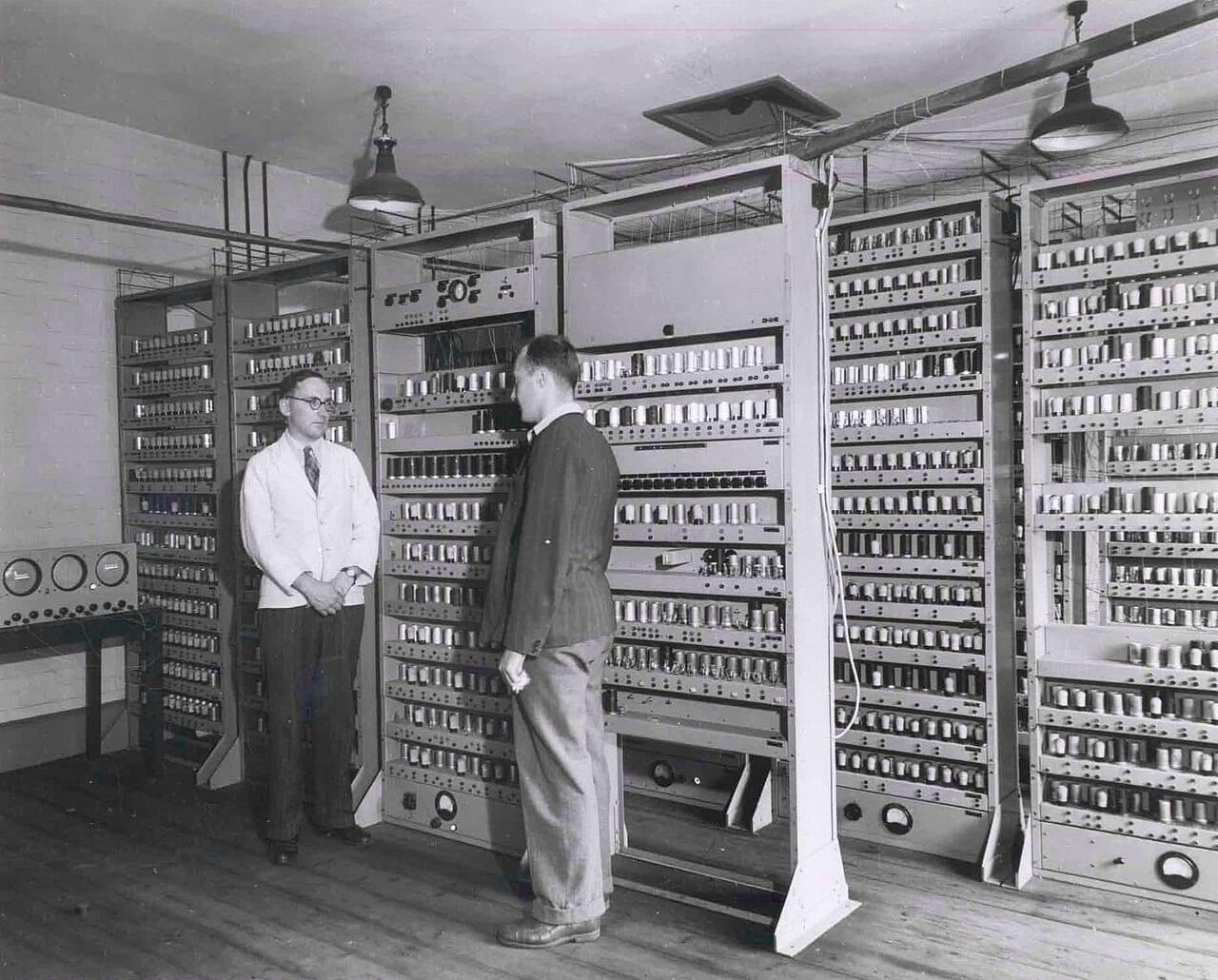
Maurice Wilkes and Bill Renwick in front of the complete EDSAC, whose stepping switches loaded the program that loaded the programs. Photo © Computer Laboratory, University of Cambridge, CC BY 2.0.
.jpg)
Booting is short for bootstrapping, and the idiom it borrows — "to pull yourself up by your own bootstraps" — describes something physically impossible. That is not sloppy naming; it is the whole point. Starting a computer contains a genuine chicken-and-egg paradox: software is loaded by other software that is already running, so something must load the first software, and that something cannot itself be ordinary software. The engineers of the 1950s reached for an image of impossible self-lifting because they were staring at exactly that.
The paradox, stated properly
A program lives on storage. To run, it must be in memory. The thing that copies programs from storage into memory is — a program. Turtle, meet turtle. Every layer you add just relocates the question of who loaded the loader. The machine has to lift itself by its own straps: hence the bootstrap technique, described in the 1950s, the bootstrap loader — the tiny program whose only job is to load a bigger loader — and eventually, once the phrase had worn smooth with use, the recorded shortening to just boot, first attested in 1975.
How the paradox was actually solved
Three eras, three answers to who loads the first program:
- Hands. The earliest machines had the first program put in by physical mechanism — front-panel switches, plugboards, punched tape. EDSAC in the late 1940s transferred a small fixed program into memory via stepping switches when you pressed start; that program then read the real program from tape. The "software that loads software" was, at the bottom, hardware and a human.
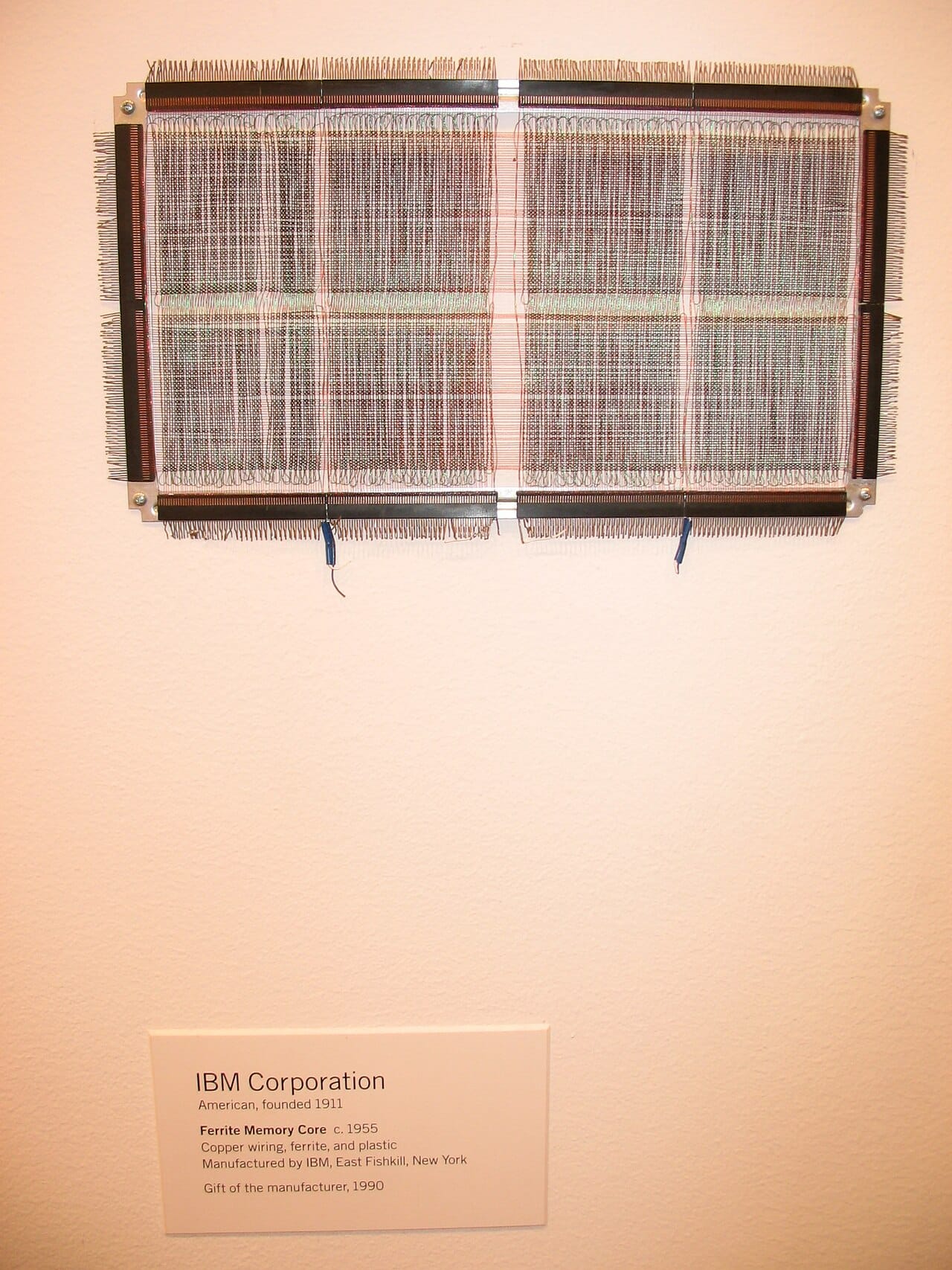
- ROM. Read-only memory dissolved the paradox properly: ship the machine with the first program permanently burned in, impossible to erase, running the instant power arrives. The bottom turtle became silicon.
- Chains. Modern boot is a relay race of loaders, each pulling up a bigger one: firmware wakes, finds a bootloader in the EFI partition, which pulls the kernel and an initramfs into memory, which mounts the real system and hands over to an init like systemd. Every stage is a bootstrap for the next — the impossible idiom, industrialized into a whole menu of bootloaders.
The word that ate its own metaphor
What makes boot a good specimen for this lane is that the metaphor ran in reverse. In ordinary English, bootstrapping named an impossibility — 19th-century usage was sarcastic, a thing no one could actually do. Computing borrowed it, solved the impossibility with ROM and loader chains, and used the word so relentlessly that the technical sense became the primary one. Startup culture then borrowed it back from computing: a bootstrapped company is self-funded, lifted by its own revenue — the once-sarcastic idiom now names a virtue. The word went from "cannot be done" to "is done billions of times a day, before breakfast" in about seventy years.
Same shape as the rest of the lane — daemon is a physics joke that became a suffix, 127.0.0.1 is an unexplained ledger row that became the most-pinged address alive: the vocabulary of computing is full of borrowed images that outlived, and sometimes inverted, their sources. You cannot pull yourself up by your bootstraps. Your machine begs to differ, every morning.
booting: from "bootstrapping," the 1950s bootstrap technique for solving the load-the-loader paradox; shortened to "boot" by 1975. The idiom describes an impossibility; ROM and chained loaders made it routine.
Read next