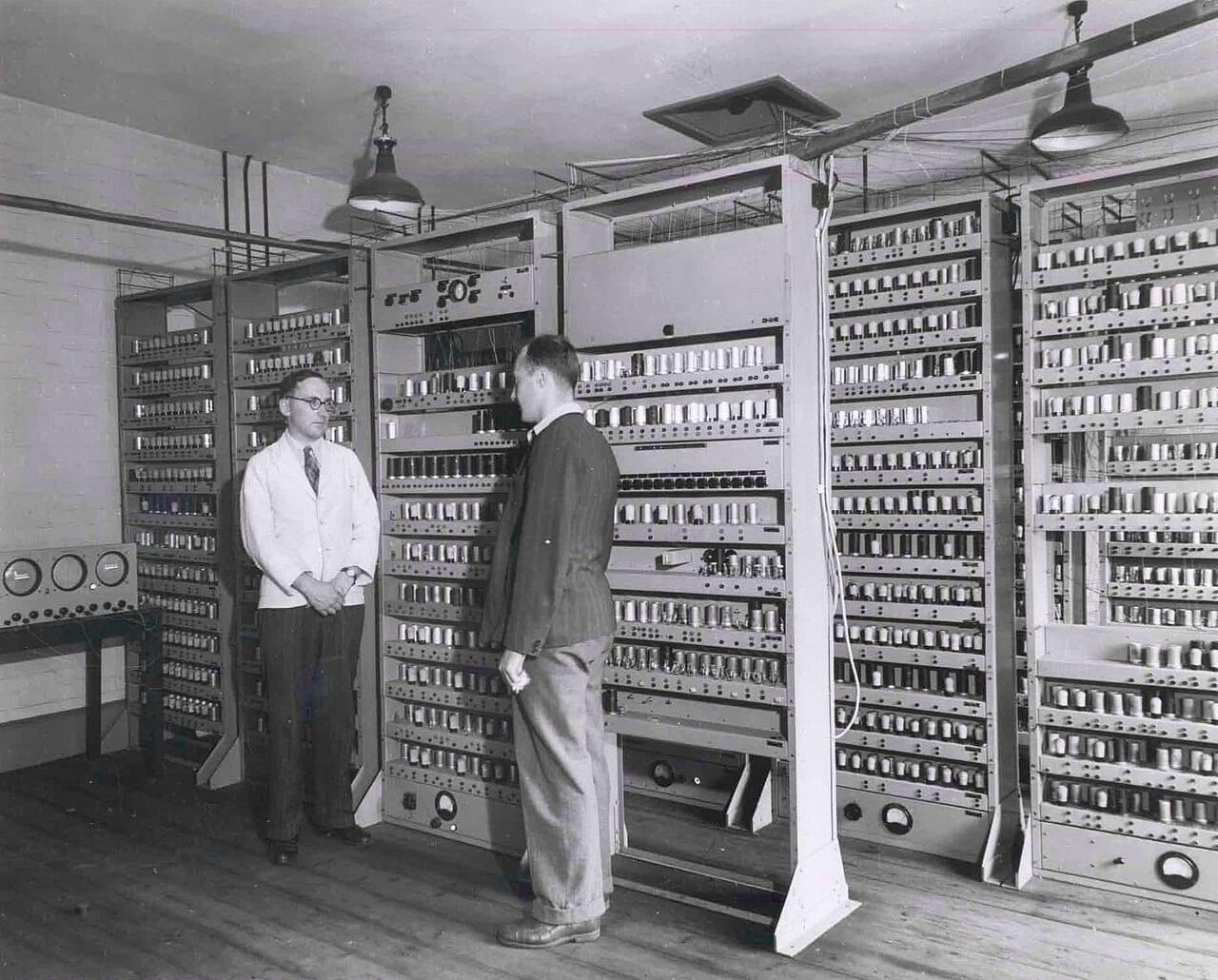
Why is it called a core dump? The memory was made of tiny magnets
When a program dies badly, the file it leaves behind is named after hardware that has been extinct for fifty years: little ferrite rings threaded by hand onto wire grids, by the millions, mostly by women whose work your crash reports still commemorate.
AI-assisted postDrafted with help from Claude, edited and fact-checked by Mart. See transparency policy →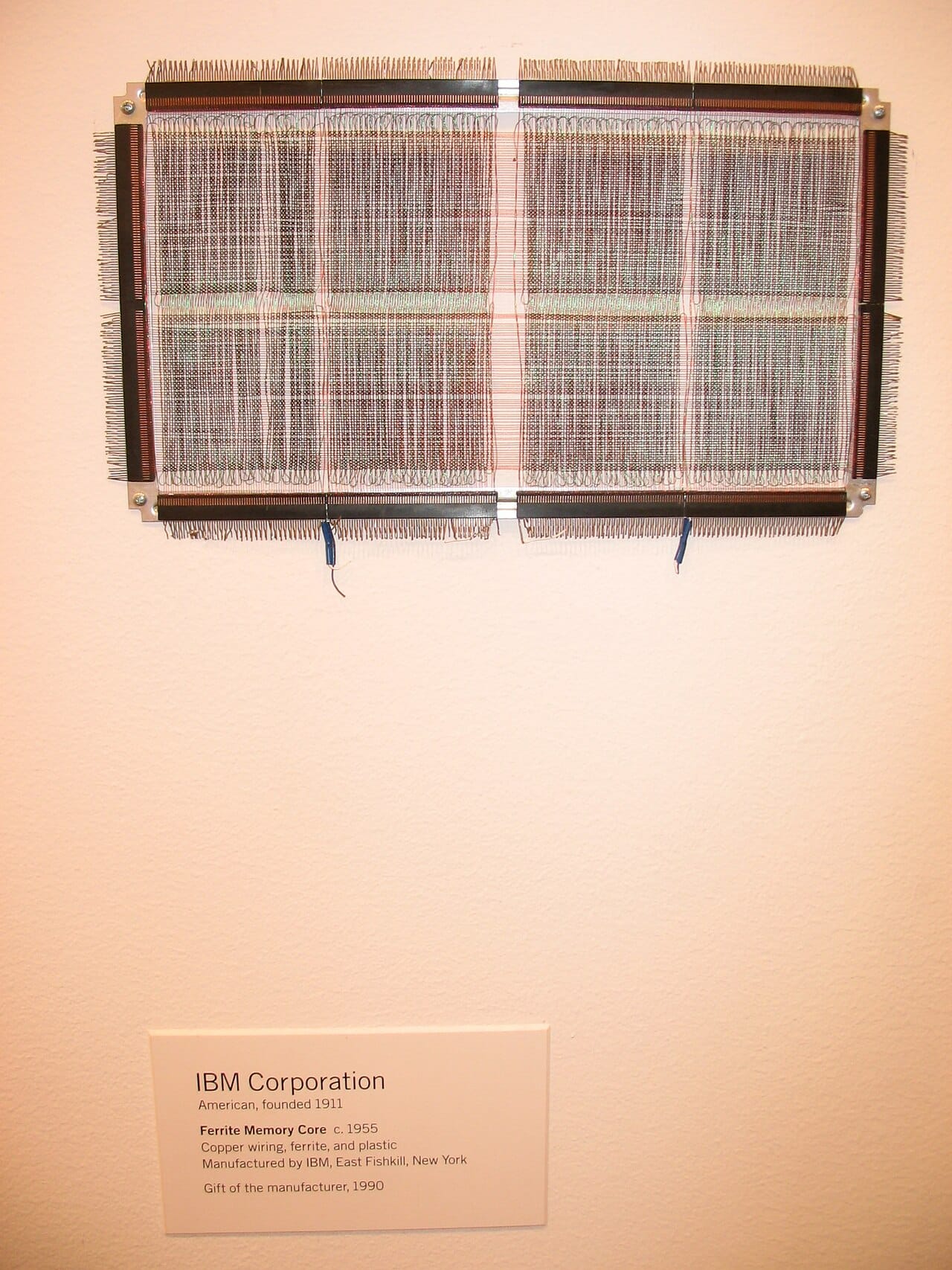
An IBM ferrite memory core, c. 1955: copper wire, plastic, and thousands of hand-threaded magnetic rings — one per bit. This is the "core" your crash dumps are named after. Photo by Joachim Fenkes, CC BY-SA 2.0.

When a program crashes hard, Unix leaves behind a file called core, and generations of programmers have typed ulimit -c or grepped /proc/sys/kernel/core_pattern without meeting the word's referent, because the referent has been extinct for half a century. The core in core dump is magnetic-core memory: RAM built from tiny ferrite rings — cores — one ring per bit, threaded onto grids of wire. From the 1950s to the 1970s, that lattice of magnets was memory, and dumping "the core" meant copying out the state of every ring at the moment of death.
Memory you could hold
Core memory deserves a moment of disbelief. Each bit was a physical donut of ferrite, magnetized clockwise or counterclockwise — one or zero — with wires threaded through the hole to read and write it. A megabyte was over eight million hand-threadable rings; core planes were in fact largely woven by hand, much of that labor done by women whose needlework literally held the state of the machine. (The Apollo guidance computer's rope memory — a cousin technology — was woven by textile workers, and engineers called it LOL memory: little old lady memory.) Every bit in RAM was somewhere you could point to. When the machine crashed, the evidence was frozen in the magnets.
The dump
So the post-mortem ritual: copy the state of the cores out for inspection. The earliest core dumps were paper printouts — columns of octal or hexadecimal, the whole contents of memory on fanfold paper, which some unlucky human then read line by line, bug-hunting through the wreckage. Dump was the honest word for it: not a report, not a summary — the raw insides, tipped out.
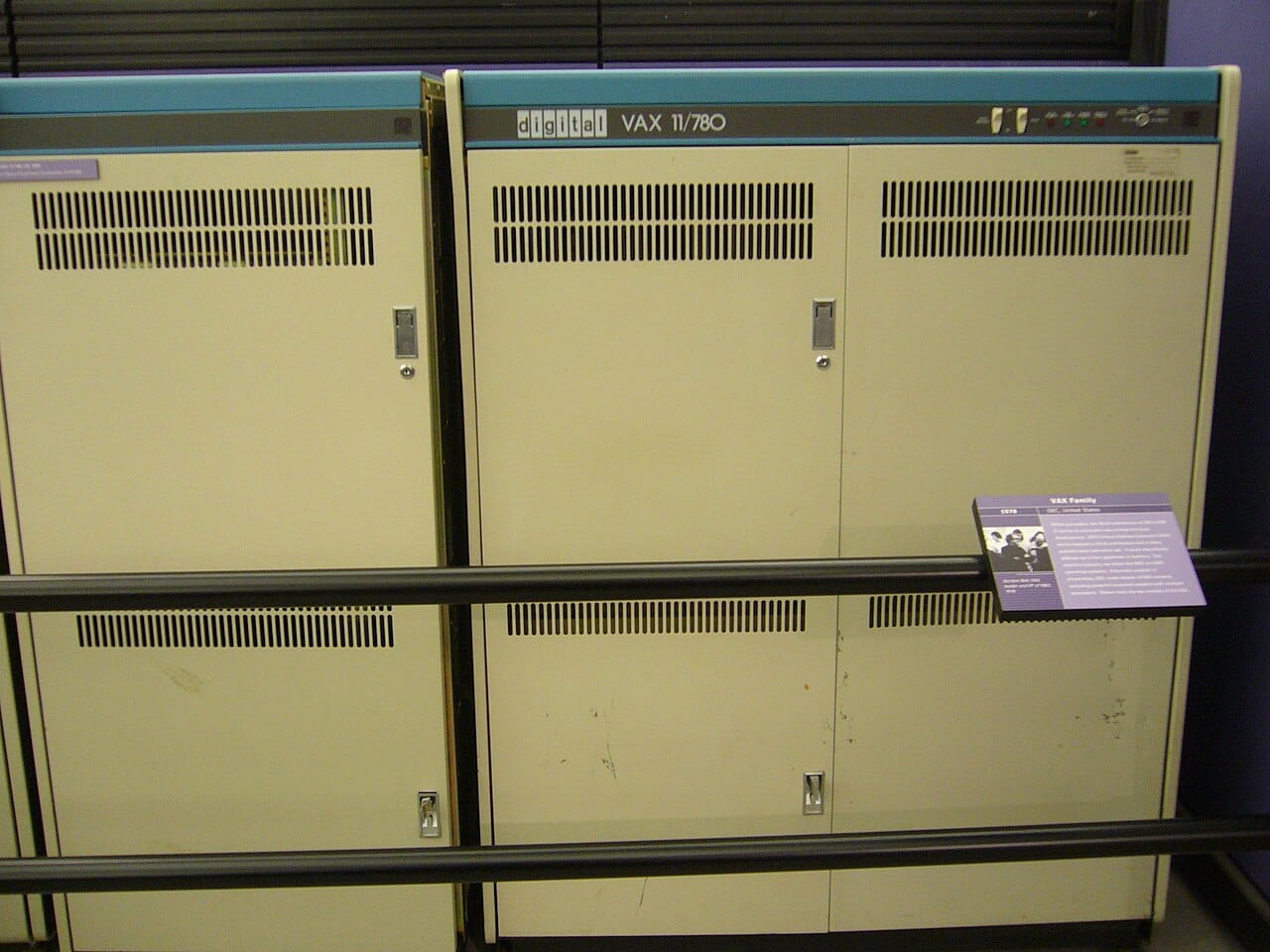
Semiconductor RAM killed core memory in the 1970s. Nothing was rings anymore; everything was silicon. The file kept the name anyway: crash a process today and the kernel writes core (or routes it through core_pattern to systemd-coredump), a fossil filename commemorating hardware that no living junior engineer has touched. The name is doing what the lane's names always do — boot outlived the bootstraps, tty outlived the teletype, core outlived the cores.
The fossil test
Core dump might be the purest specimen in this whole series, because the word denotes the substrate itself, not a command or a metaphor. Grep froze syntax; daemon froze a joke; core froze the actual atoms memory used to be made of. Say "core dump" and you are speaking, grammatically, as if RAM were still ferrite rings on copper wire — the linguistic equivalent of calling your car a horseless carriage. Nobody corrects it because the term has outlived everyone who would notice, which is the final stage of every etymology this series has traced: first the name is literal, then it is a joke, then it is a fossil, then it is just the word.
core dump: from magnetic-core memory — ferrite rings, one per bit, the dominant RAM of the 1950s–70s. Earliest dumps were octal printouts of every ring's state. The rings died with the 70s; the filename core and core_pattern survive on every Linux box.
Read next