Why Apache is called Apache
The Apache web server has two competing origin stories — "a patchy server" built from NCSA httpd patches in 1995, and respect for the Apache Native American nation. The project's own documentation has told both, and which one is "real" has become a live question.
AI-assisted postDrafted with help from Claude, edited and fact-checked by Mart. See transparency policy →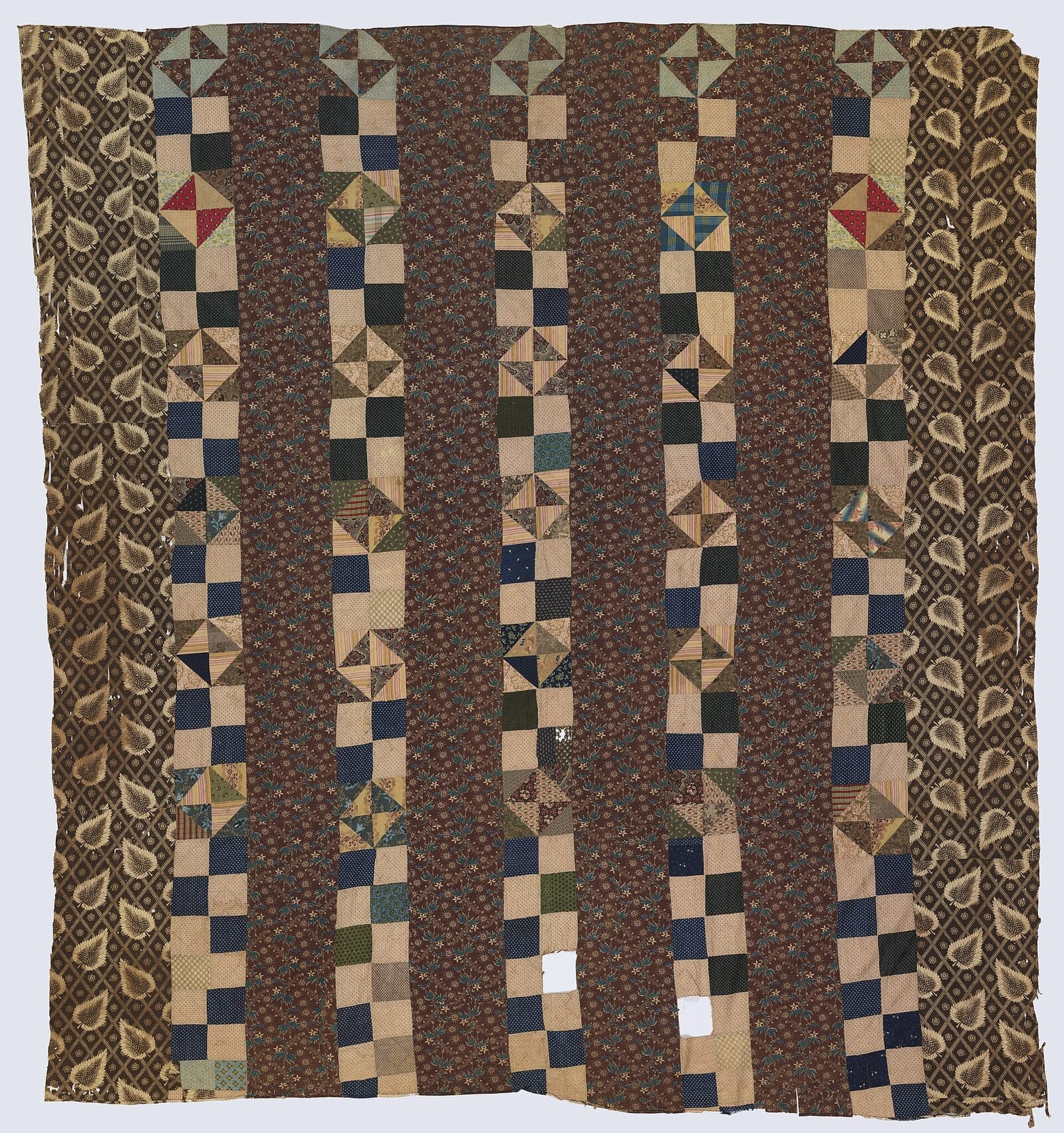
A patchwork quilt, USA, mid-19th century — something durable assembled entirely from patches. Cooper Hewitt collection, public domain.
The web server that ran the majority of the internet's sites through the late 1990s and 2000s has two origin stories for its name, and the unusual thing is that both have been told by the project itself, at different times, with apparent sincerity. One is a pun: Apache is "a patchy server," assembled from a pile of patches to an abandoned predecessor. The other is a tribute: the name was chosen out of respect for the Apache Native American nations, renowned for endurance and skill. The project's official history has at various points endorsed each. Sorting out which came first — and why the foundation now prefers the tribute over the pun — is a small case study in how organisations retroactively dignify their own names.
NCSA httpd, and the code that stalled
The story starts with a different piece of software. In the early 1990s the dominant web server was the NCSA HTTPd, developed at the National Center for Supercomputing Applications at the University of Illinois — the same lab that produced the Mosaic browser. NCSA httpd was written largely by Robert (Rob) McCool. It was free, it was widely deployed, and then, in mid-1994, McCool left NCSA and development effectively stalled.
What happened next is the part the pun describes accurately. Webmasters who depended on NCSA httpd had each independently written their own bug fixes and extensions, and these were floating around as uncoordinated patches. There was a working server, an absent maintainer, and a scattered pile of community fixes that needed someone to gather and reconcile them. In early 1995 a small group set out to do exactly that.
The Apache Group, 1995
By the end of February 1995, a core group of eight had formed, coordinating over a private mailing list set up by Brian Behlendorf and Cliff Skolnick, with infrastructure and bandwidth donated by HotWired in the San Francisco Bay Area. The founding members, per the project's own history, were Brian Behlendorf, Roy T. Fielding, Rob Hartill, David Robinson, Cliff Skolnick, Randy Terbush, Robert S. Thau, and Andrew Wilson. (Fielding would later author the dissertation that defined REST; this was a consequential group.)
They took NCSA httpd 1.3 as a base, folded in the published bug fixes and enhancements, tested the result on their own servers, and shipped Apache 0.6.2 in April 1995. Within months they rebuilt the architecture into the modular server that Apache became, releasing 1.0 on 1 December 1995. By 1996 Apache had overtaken NCSA httpd as the most popular web server on the internet, a position it held — by the Netcraft survey — for over a decade. The original program name was httpd, following the Unix daemon convention; the trailing d marks it as a background HTTP daemon, the same convention covered in where the word 'daemon' comes from.
"A patchy server"
The pun is the older documented explanation, and it is documented in the project's own words. The original FAQ that lived on the Apache site from roughly 1996 through 2001 described the name straightforwardly: it was a "cute name which stuck," based on existing code plus a series of software patches — "a pun on 'A PAtCHy' server." Given the actual history — a server literally reconstructed by applying community patches to NCSA httpd — the pun is not just plausible, it is descriptive. The thing genuinely was a patchy server before it was anything else.
Behlendorf, the most-quoted founder on this question, has muddied the water over the years. In a 2000 interview he described the name as connoting "take no prisoners, be kind of aggressive and kick some ass" — an evocation of attitude with no mention of either patches or Native American history. Later he is quoted endorsing the tribute reading while also acknowledging the pun. The founder himself has given at least three framings across two decades, which is the strongest evidence that the name was, at the time, mostly an intuition that sounded good and only got a definitive backstory afterward.
The official tribute
The Apache Software Foundation's modern position foregrounds the tribute. The name, the foundation states, was chosen "from respect for the various Native American nations collectively referred to as Apache, well-known for their superior skills in warfare strategy and their inexhaustible endurance." Behlendorf has linked it specifically to the resilience of Geronimo's resistance, while conceding that it "also makes a cute pun on 'a patchy web server.'"
Notice the rhetorical move: the tribute is primary, the pun is a secondary happy accident. That is the inverse of the chronological evidence, where the pun appears in the earliest documentation and the tribute is foregrounded later. Both can be partly true — it is entirely possible the group liked the word because it evoked endurance and because it punned on "patchy," with neither being a clean single origin. But the foundation's framing, which downplays the pun, is a tidier and more dignified story than the messy reality of eight webmasters reconciling patch files.
It is worth being honest that the official "About Apache" page does not, in fact, explain the name at all — it tells the technical history of the patches and the group without committing to a naming etymology. The tribute explanation lives in the foundation's broader public statements rather than in the canonical project history, which itself describes precisely the patch-reconciliation process the pun refers to.
The feather and the modern controversy
The visual identity has always leaned into the Native American reading: the Apache logo is a feather, explicitly evoking the imagery rather than the patches. That choice keeps the tribute interpretation alive even for people who never read a FAQ.
It also made the name a live issue. In January 2023 the advocacy group Natives in Tech publicly accused the Apache Software Foundation of cultural appropriation and asked it to change its name, arguing that a software foundation using the name and imagery of a living people, without their involvement, is not the neutral tribute it presents itself as. The foundation declined to change the name. The episode is a reminder that a naming choice made casually by a small group in 1995 — whatever the real mix of pun and tribute behind it — can carry weight the original namers never weighed, once the project becomes one of the most widely deployed pieces of software on earth and the steward of dozens of other major projects.
From a server to a foundation
The naming question grew heavier because the name itself spread far beyond the web server. The Apache Software Foundation, incorporated in 1999, took the name of the original group and applied it to a governance model — the "Apache Way" of meritocratic, community-driven open-source development — that now stewards hundreds of projects. Many of them are infrastructure most engineers touch weekly without thinking about the feather: Apache Kafka1, Apache Spark2, Apache Cassandra, Apache Hadoop3, Apache Airflow4, the Apache license itself. The word stopped being the name of a patched-up httpd and became a brand for an entire approach to building software in the open.
🔗 Learn more — 1 What is Apache Kafka?
🔗 Learn more — 2 What is Apache Spark?
🔗 Learn more — 3 What is Hadoop (and why MapReduce faded)?
🔗 Learn more — 4 What is Apache Airflow?
That is why the 2023 request to reconsider the name was not trivial to act on even setting aside the merits: the name is no longer attached to one program that could be quietly renamed. It is attached to a foundation, a software licence used across the industry, and a long list of projects whose own names embed it. A casual 1995 choice by eight webmasters had, by the 2020s, become a piece of load-bearing infrastructure vocabulary — the same trajectory as a lot of names that started as throwaways and ended up too entrenched to change. The cost of a name is paid at the start, when it is cheap to pick; the weight of a name accrues later, when it is expensive to move.
Why the ambiguity persists
Most software names resolve cleanly once you find the primary source. Docker is a longshoreman; Kubernetes is Greek for helmsman; Git is a British insult its author confirmed. Apache does not resolve, and that is the interesting part. The ambiguity persists because the name predates the documentation: the group chose a word that worked on more than one level, shipped software, and only afterward did anyone need a canonical answer for press and history. By then there were two equally tellable stories and no contemporaneous note saying which one the group actually had in mind.
When that happens, organisations tend to drift toward the more flattering version. "We honoured a resilient nation" is a better founding myth than "the code was patchy," even though the patchy code is the literal, documented, technical truth of what the software was in April 1995. The pun is the etymology; the tribute is the legend that grew over it. Both are now part of the name.
A short close
Apache is "a patchy server" — a web server reconstructed in 1995 by applying a community's scattered patches to the abandoned NCSA httpd, a pun the project's own early FAQ stated plainly. It is also, per the foundation's later telling, a tribute to the endurance of the Apache nations, an explanation reinforced by the feather logo and complicated by a 2023 request to drop the name entirely. The honest reading is that the pun is the documented origin and the tribute is the dignified retelling, and that the founder himself has given enough conflicting accounts to suggest the name was an intuition before it was a story. The patches were real. The rest is what the patches got dressed in afterward.
Read next